The Year the Caps Changed: A Lesson in Paint Longevity
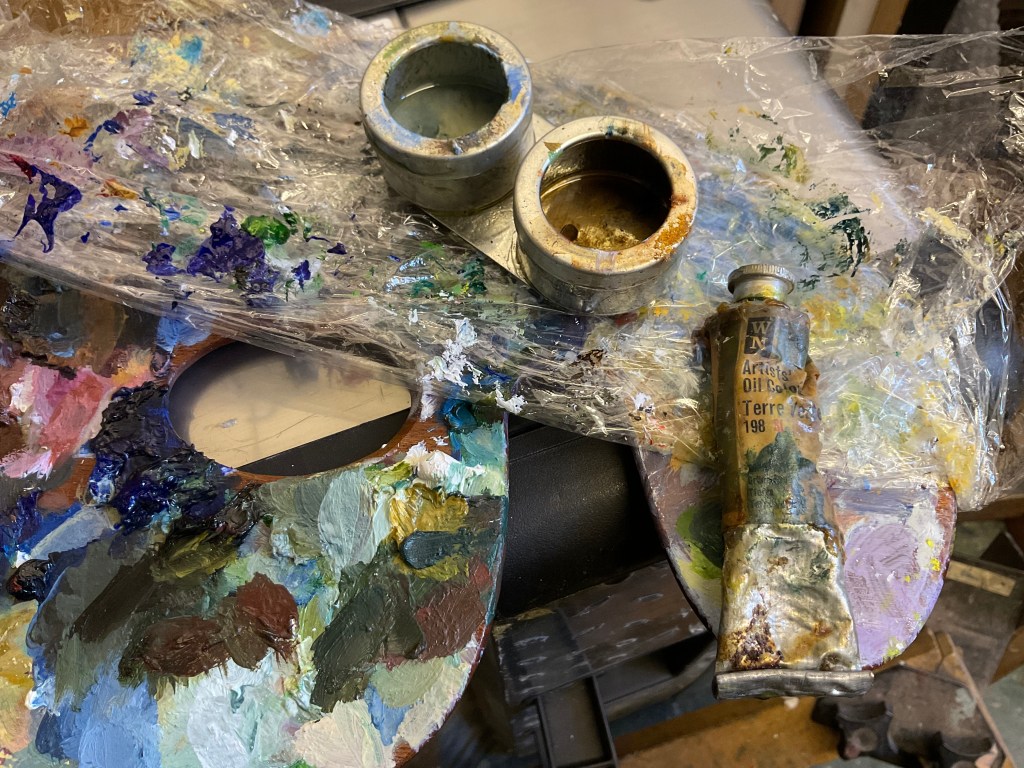
As I discovered today, 1968 was a turning point for more than just social history—it was the year Winsor & Newton stopped using metal caps on their tubes of oil paint.
I am often asked, “How long does oil paint actually last?” My go-to answer usually involves a lucky find from six years ago: I bought an antique box easel that came with a hidden treasure—a collection of vintage oil paints. To this day, I am still using many of them!
It is a true testament to the quality of the pigments and the milling process of that era that the consistency remains perfectly usable after 60+ years. While the paint inside remains pristine, the shift in 1968 highlights a significant change in how we interact with the tubes themselves.
The “modern” replacement caps are plastic. While they were undoubtedly cheaper and easier to mass-produce, they lack the “heirloom” durability of their predecessors. In my experience:
- Plastic caps become brittle over the decades, often cracking or shattering when you try to twist off a stuck lid.
- Cross-threading is a constant battle with plastic, whereas the old metal-on-metal threads felt far more secure and precise.
There is something deeply satisfying about opening a tube of paint that was manufactured before the moon landing and finding it just as buttery and vibrant as the day it was tubed. It’s a reminder that while technology moves forward, some “old-fashioned” standards of manufacturing are hard to beat.


Leave a comment